

How to Maximize Coffee Bean Shelf Life After Roasting
Last Updated: November 4, 2026
Quick Summary
Coffee bean shelf life after roasting starts counting down the day the roast finishes, not the day you open the bag. Unopened sealed bags keep well for 1 to 3 months past roast, while opened whole beans in an airtight container hold good flavor for 2 to 4 weeks.
- Store beans in an opaque, airtight container at room temperature, away from the stove, window, and fridge door.
- Freeze beans in single-week or single-brew-session portions and never refreeze the same beans.
- Dark roasts fade sooner than medium or light roasts because surface oils are attacked by oxygen first.
- Ground coffee can lose noticeable aroma within days to a couple of weeks, so grind just before brewing.
- Shake beans in a sealed jar and smell: flat or dusty aroma means the beans have faded.
Table of Contents
- What Coffee Bean Shelf Life After Roasting Really Means
- Peak Freshness: When Roasted Coffee Tastes Best
- How Long Do Whole Coffee Beans Last Once Opened?
- How to Keep Coffee Beans Fresh for Months
- Signs of Stale Coffee Beans and a Simple Sensory Test
- How Roast Level and Bean Type Change the Clock
- Whole Beans vs. Ground Coffee: Shelf Life Differences
- Choose Your Fresh-Roasted Beans and Start Brewing
- Frequently Asked Questions
What Coffee Bean Shelf Life After Roasting Really Means
Coffee bean shelf life after roasting is the window during which roasted beans hold their best aroma, flavor, and texture, and it starts counting down the day the roast finishes, not the day you open the bag. The clock begins at the roaster, and every day after that is a small withdrawal from the flavor account. Below, we break down peak freshness, storage methods, and a simple sensory test so you know precisely when your beans are still worth brewing and when they have gone quiet.
Most bags print a best-by date that says nothing about the roast date, which is the number that actually matters. A bag stamped six months out can already be three months old when it reaches your shelf.
Freshness, Flavor Quality, and Food Safety Are Not the Same
Freshness describes how much aroma and carbon dioxide the beans still hold. Flavor quality describes how good the cup tastes. Food safety is a separate question entirely, and it is the one most guides blur.
Roasted coffee beans are a dry, low-moisture product, and properly stored beans do not spoil in the way fresh food does. Stale coffee tastes flat and papery, but it is not a safety hazard. The real risk is moisture: beans that absorb humidity or sit in a damp cabinet can develop mold, which you will see and smell. Keep beans dry, keep them sealed, and you are managing both flavor and safety at once.
Peak Freshness: When Roasted Coffee Tastes Best
Roasted coffee generally reaches peak flavor within days of the roast date, depending on the bean and how you brew it. During the first few days, beans release carbon dioxide in a process called degassing, which can make a very fresh cup taste sharp or foamy. Give them a short rest, and the cup settles into its sweet spot.
After that window, quality declines gradually rather than falling off a cliff. Many coffee drinkers find beans still taste good for several weeks past their peak, especially whole beans stored well. The drop is slow at first and faster once the bag is opened and oxygen gets regular access.
How Long Do Whole Coffee Beans Last Once Opened?
Opened whole bean coffee holds good flavor for a limited time when stored in an airtight container away from light and heat. Unopened, sealed bags keep well for a period past the roast date, and packaging type affects how long.
The variable that moves that range most is oxygen. Every time you open the bag, fresh air replaces the protective gas inside, and oxidation begins nibbling at the coffee oils that carry aroma. A bag you open twice a day ages faster than one you decant once into a sealed jar and leave alone.
How to Keep Coffee Beans Fresh for Months
Keeping coffee beans fresh for months comes down to four enemies: oxygen, light, heat, and moisture. Beat all four and whole beans will hold enjoyable flavor far longer than the typical bag suggests.
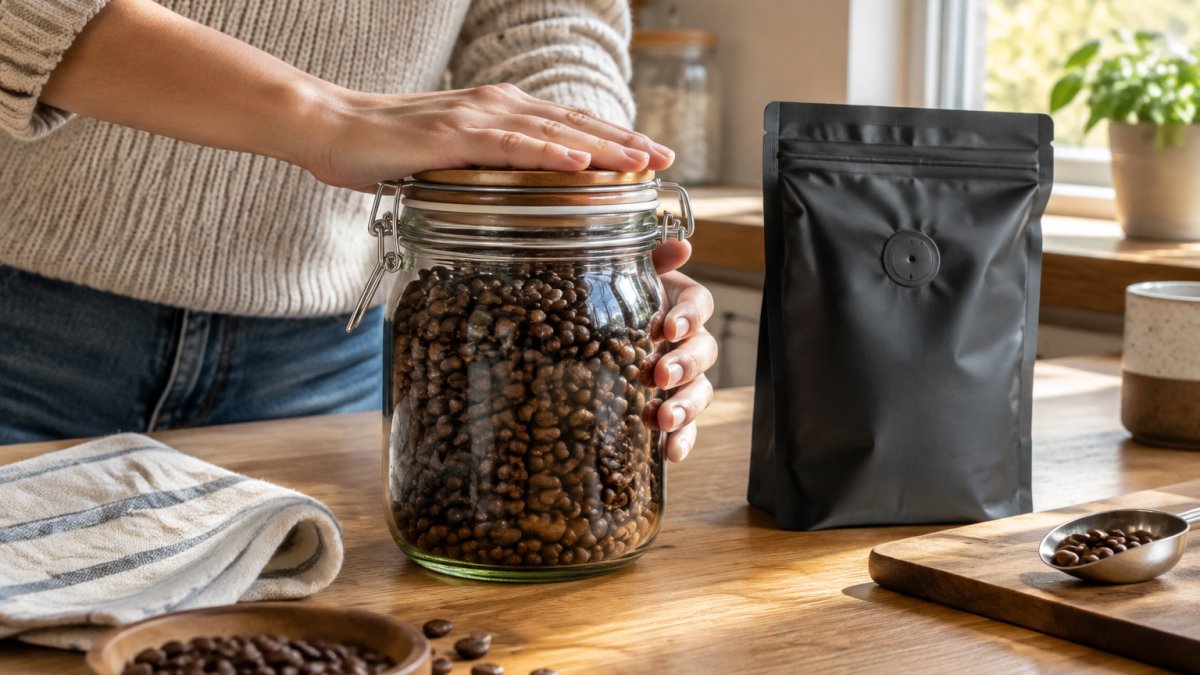
Store beans in an opaque, airtight container at room temperature, away from the stove, the window, and the fridge door. Buy in quantities you will finish within a few weeks rather than stocking up on a great deal. If you want the full step-by-step method, our guide on how to store coffee beans for freshness walks through container choice, location, and portioning in detail.
Match Your Storage Method to Your Package Type
Not every bag needs to be decanted. The packaging your beans arrive in often tells you how to treat them.
- One-way valve bags: The valve lets carbon dioxide escape while limiting oxygen entry. Keep beans in the original bag, press out excess air, and seal the top with a clip. This is the simplest option for beans you will finish within a few weeks.
- Vacuum-sealed packaging: Best left sealed until you are ready to brew. Once opened, transfer to an airtight container, because the vacuum is gone for good.
- Nitrogen-flushed packaging: The inert gas slows oxidation while sealed. Treat it like a valve bag after opening.
- Resealable pouches: Convenient but rarely airtight. Roll the top down, clip it, and consider a dedicated container for longer storage.
Freeze in Practical, Repeatable Portions
Freezing works well if you do it in portions you will use in one go. Divide beans into single-week or single-brew-session amounts, seal each in an airtight bag with the air pressed out, and freeze. Pull one portion at a time and let it come to room temperature before grinding.
Watch out: refreezing the same beans repeatedly exposes them to moisture each thaw cycle, and that is what dulls the cup. Portion once, freeze once, and leave the rest alone.
Signs of Stale Coffee Beans and a Simple Sensory Test
Stale coffee beans can show themselves before you brew through a weak aroma and a dull appearance. The clearest signal is in the cup, where stale coffee tastes flat, papery, or faintly like cardboard, with none of the sweetness or acidity the same bean showed when fresh.
Here is a quick test you can run in under a minute. Put a small handful of beans in a sealed jar, shake it, and open the lid. Fresh beans release a clear, sweet, roasty smell. Flat or dusty aroma means the beans have faded. For a fuller checklist, our breakdown of the signs of fresh coffee beans covers aroma, surface texture, and what freshness looks like at each stage.
How Roast Level and Bean Type Change the Clock
Roast level shifts the timeline more than most people expect, and it should change how you store and when you buy. The mechanism is oil migration: during roasting, oils move from the bean's interior to the surface, and darker roasts develop more surface oil. Those surface oils are the first thing oxygen attacks, so dark beans tend to fade sooner than medium or light roasts. Lighter roasts often reward a short rest after roasting before they show their best cup.
A practical way to adjust storage by roast level:
- Dark roasts: Buy in smaller quantities and plan to finish within 2 to 3 weeks of opening. Store in an opaque airtight container and consider freezing half the bag in portions if you cannot finish it in time. Surface oil also makes dark beans more prone to picking up odors, so keep them away from spices and cleaning supplies.
- Medium roasts: The most forgiving range. The standard 2 to 4 week opened window applies, and these beans tolerate a valve bag or airtight container equally well.
- Light roasts: These often need a longer rest and can hold enjoyable flavor for 4 to 6 weeks after opening when stored well. Do not judge a light roast in the first few days, it may taste sharp or grassy until it settles.
Bean density and processing matter too. Dense, high-grown beans and natural-process coffees can behave differently in storage, sometimes holding aroma longer and sometimes peaking earlier. Natural-process beans often carry more fruit-forward compounds that fade at a different rate than the nutty, chocolatey notes of washed coffees, so taste is the only reliable calendar.
The practical takeaway: judge freshness by taste, not by a single universal date, and let roast level guide how much you buy and how you store it. Our Breakfast Blend and Ethiopia Natural are both available to try.

Whole Beans vs. Ground Coffee: Shelf Life Differences
Whole beans last longer than ground coffee, and the gap is significant. Grinding exposes far more surface area to oxygen, so ground coffee can lose noticeable aroma within days to a couple of weeks, while whole beans hold for weeks to months under good storage.
Grind just before you brew whenever possible. If you must buy pre-ground, store it in a small airtight container, keep it dark and cool, and plan to finish it quickly. The convenience is real, but so is the trade-off in shelf life.
| Storage Situation | Approximate Window | What to Expect |
|---|---|---|
| Unopened, sealed bag | 1 to 3 months past roast | Aroma largely intact |
| Opened whole beans, airtight container | 2 to 4 weeks | Gradual, slow decline |
| Opened whole beans, loose bag | 1 to 2 weeks | Faster flavor loss |
| Ground coffee, opened | Days to 2 weeks | Noticeable fade |
| Frozen in portions | Several months | Best retention if not refrozen |
Choose Your Fresh-Roasted Beans and Start Brewing
Buying beans that were roasted recently and in amounts you will actually drink is a sound way to manage freshness. If you want the deeper case for why this matters, our notes on the benefits of drinking freshly roasted coffee explain what peak flavor actually delivers in the cup.
Ready to buy? Our fresh roasted coffee beans buyer's guide covers how to read the roast date on your bag. Then pick a starting point: the Breakfast Blend is a smooth medium roast for daily brewing, while the Brazil Santos brings cocoa notes and a clean finish.
Frequently Asked Questions
How long can coffee beans stay fresh after roasting?
Whole roasted coffee beans generally reach peak flavor within days of the roast date and stay enjoyable for a limited time when kept in an airtight container away from light, heat, and moisture. After that window, oxidation and degassing gradually mute aroma and flatten flavor. Ground coffee loses freshness much faster, often within 1 to 2 weeks. Always check the roast date, not just the best-by date, and store beans in a sealed, opaque container at room temperature.
How long do whole coffee beans last once opened?
Once you open the bag, whole beans hold good flavor for a limited time if you reseal the package tightly or move the beans to an airtight container. Exposure to oxygen, light, and humidity speeds up staling, so keep the container closed between uses and store it in a cool, dark cabinet.
What are the signs of stale coffee beans?
Stale beans lose their aroma, smell flat or papery, and may taste dull, woody, or slightly bitter with none of the sweetness or acidity you expect. Visually, fresh beans have a subtle sheen from coffee oils; very old beans can look dry and matte.
Does opening the bag affect coffee bean shelf life?
Yes. An unopened, sealed bag protects beans from oxygen and moisture, so it can hold quality for a period past the roast date. Once opened, oxygen enters every time you unseal the bag, and staling accelerates. To slow this down, squeeze excess air out before resealing, use the bag's valve if it has one, or transfer beans to a small airtight container that limits headspace.
The challenge is simple: most coffee goes stale before anyone notices, and the fix starts with knowing your roast date and storing well. We can help with the first half. Evolve Coffee Company roasts every batch to order, sources beans carefully, and delivers fast so your coffee arrives near its peak, not past it. Get started with Evolve Coffee Company and brew a cup that tastes the way fresh-roasted coffee should.
