

Benefits of Drinking Freshly Roasted Coffee
Last Updated: October 23, 2026
Quick Summary
Drinking freshly roasted coffee delivers more of the aromatics, sweetness, and body you paid for, because these qualities peak in the days and weeks after roasting and then decline. Fresh beans also brew more consistently, so you can dial in a recipe and trust it tomorrow. Brew your coffee roughly four days to three weeks after the roast date for the best balance of flavor and stability.
- Roast date, not expiration date, tells you whether your coffee is worth brewing.
- Brew between roughly four days and three weeks after the roast date for the best balance.
- Store beans whole in an airtight container away from light, heat, and moisture, and grind right before brewing.
- Espresso tends to prefer beans rested a bit longer, while pour-over and drip shine early.
- Plan on finishing a bag within about a month of the roast date for peak flavor.
Table of Contents
- Why Freshly Roasted Coffee Tastes and Performs Differently
- The Benefits of Drinking Freshly Roasted Coffee
- How to Tell If Coffee Beans Are Fresh
- How Soon to Brew Coffee After Roasting
- How to Store Freshly Roasted Coffee Beans
- Common Myths About Freshly Roasted Coffee
- Frequently Asked Questions
Why Freshly Roasted Coffee Tastes and Performs Differently
Freshly roasted coffee is coffee that has been roasted recently enough that its volatile aroma compounds, carbon dioxide, and oils are still intact. That window matters more than most drinkers realize. Coffee begins losing its best qualities within days of roasting, not months, and the gap between a fresh bag and a supermarket bag is wider than the price difference suggests.
At Evolve Coffee Company, we roast every batch to order for exactly this reason: the clock starts at the roaster, not the shelf. Below, we'll show you exactly what changes in those first weeks, how to spot stale beans before you brew them, and how to store what you buy so the benefits of drinking freshly roasted coffee actually reach your cup.
Here's what most guides get wrong: they treat freshness as a flavor preference. It's closer to a performance issue. The same bean, brewed the same way, behaves differently depending on how long it has sat.
The Benefits of Drinking Freshly Roasted Coffee
The core benefit is simple: fresh beans deliver more of what you paid for. Aromatics, sweetness, and body all peak in the days and weeks after roasting, then decline. You're not just tasting "better" coffee; you're tasting more of the coffee you bought.
Better Flavor and Aroma From Roast-to-Order Beans
Aromatic compounds are volatile, which means they evaporate. Every day a roasted bean sits exposed to air, it gives up some of the scent that makes coffee taste like coffee rather than like hot brown water. Beans roasted to order arrive closer to peak, so the cup tastes fuller and sweeter with less effort from your brewing method.
The practical effect: you can brew a fresh bean with a simple pour-over and get a rounder cup than an elaborate setup can pull from a stale one. Freshness does more work than gear.
A More Consistent, Predictable Cup
Stale coffee is unpredictable. One bag tastes flat, the next tastes harsh, and you can't tell whether the problem is your grind, your water, or the beans. Fresh beans behave consistently because the variables are stable. That consistency is what lets you dial in a recipe and trust it tomorrow.
For remote workers brewing between meetings, predictability matters as much as flavor. You want the same good cup at 9 a.m. and 3 p.m., not a daily experiment.
How to Tell If Coffee Beans Are Fresh
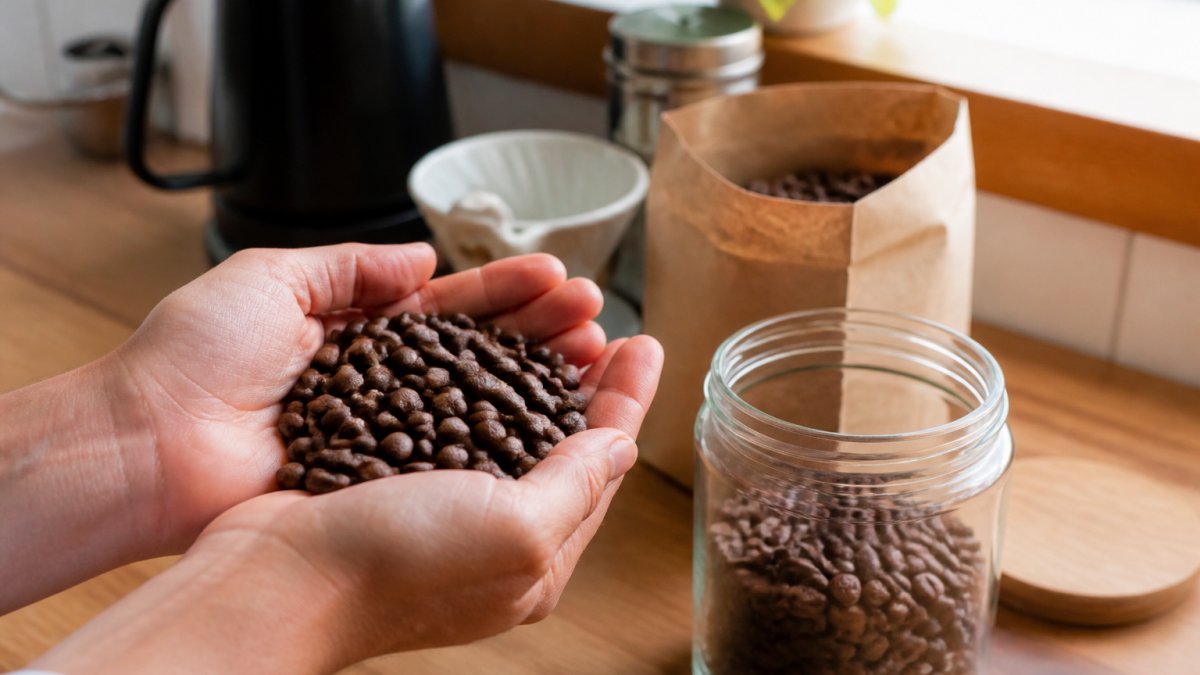
The fastest test is the roast date on the bag. Freshly roasted beans carry a printed roast date, not just a "best by" date, and that single number tells you more than any label claim. If a bag shows only an expiration date, treat freshness as unknown.
Beyond the date, use your senses:
- Smell: Fresh beans release a clear, sweet aroma when the bag opens. Stale beans smell faint or dusty.
- Look: Fresh beans have a subtle sheen from surface oils. Very oily beans are usually older, not better.
- Feel and sound: Fresh beans feel firm and click cleanly against each other. Soft, dull beans have given up their structure.
- The bloom test: Pour hot water over fresh grounds and they swell and bubble as trapped carbon dioxide escapes. A weak or missing bloom is a strong sign of staleness.
A common mistake is judging freshness by the bag's one-way valve alone. The valve helps, but it says nothing about when the beans were roasted.
How Soon to Brew Coffee After Roasting
Brew your coffee between roughly four days and three weeks after the roast date for the best balance of flavor and stability. Brewing the same day is possible but often disappointing: beans release carbon dioxide for the first few days, and that gas can interfere with even extraction, producing a flat or oddly sour cup.
The window shifts by method. Espresso tends to prefer beans rested a bit longer, since fresh gas disrupts pressure and crema. Pour-over and drip are more forgiving and shine early. If you buy a bag and it tastes sharp on day two, wait a few days and try again before blaming the beans.
The ideal brewing window depends on how you brew, but the general range is narrow.
| Timing after roast | What to expect | Note |
|---|---|---|
| Same day | Often disappointing, flat or oddly sour | Carbon dioxide interferes with even extraction |
| Roughly four days to three weeks | Best balance of flavor and stability | Recommended window |
| Day two, tastes sharp | Wait a few days and try again | Don't blame the beans yet |
| First cup tastes thin | Seal it and give it three to five days | Most "bad" fresh beans are too young |
| Espresso | Prefers beans rested a bit longer | Fresh gas disrupts pressure and crema |
| Pour-over and drip | More forgiving and shine early | , |
How to Store Freshly Roasted Coffee Beans
Store freshly roasted coffee beans whole, in an airtight container, away from light, heat, and moisture, and grind right before brewing. Those four rules protect more flavor than any gadget. Whole beans have far less surface area exposed to air than ground coffee, which is why grinding fresh is the single biggest upgrade most drinkers can make.
What works in practice:
- Keep beans in the original bag with the valve sealed, or move them to an opaque airtight canister.
- Store at room temperature, not in the fridge. Condensation and food odors do more damage than warmth.
- Skip the freezer unless you're storing a large amount long-term; if you do freeze, portion into sealed bags and don't refreeze.
- Buy amounts you'll finish within a few weeks.
For anyone ordering online, shelf life after delivery is a fair question. Plan on finishing a bag within about a month of the roast date for peak flavor, and expect the coffee to stay enjoyable, if less vivid, for a while beyond that.
Common Myths About Freshly Roasted Coffee
Myth: Oily beans mean fresh beans. Surface oil develops over time and with darker roasts. It's not a freshness badge.
Myth: The freezer keeps coffee fresh indefinitely. Freezing slows decline but doesn't stop it, and moisture from repeated thawing ruins beans fast.
Myth: Expiration dates tell you when coffee goes bad. They're a shelf-life estimate, not a roast date. A bag can carry a date a year out and still be months old.
Myth: Fresh coffee is always better on day one. Too-fresh beans brew unevenly. A short rest usually improves the cup.
Myth: You can't taste the difference. Most daily drinkers can, once they compare a fresh bag against a stale one side by side. The contrast is the point.
At Evolve Coffee Company, we'd rather you test that yourself than take our word for it. Order a small amount, brew it against what's in your cabinet, and let the cup settle the argument. Our single-origin and blend options are roasted to order and shipped fast, so the beans reach you close to peak rather than past it.
Frequently Asked Questions
What are the main benefits of drinking freshly roasted coffee?
Freshly roasted coffee delivers fuller flavor and aroma because the volatile compounds that create taste are still intact. Beans roasted weeks or months ago have lost much of that character to oxidation. Fresh coffee also brews more consistently, since degassing has settled and water extracts the grounds evenly. The practical result is a cup that tastes the way the roaster intended, without the flat, papery notes that stale beans develop. Buying from a roaster that ships close to the roast date is the simplest way to get these benefits.
How can you tell if coffee beans are fresh?
Check the roast date on the bag first, not just the best-by date. Fresh beans typically feel dense and slightly oily on the surface for darker roasts, and they release a noticeable aroma when you open the bag. A simple test: seal beans in a small container, shake, and open it. Fresh beans push out carbon dioxide and the lid releases with a small pop. If the beans smell dull or dusty, they are past their best window.
How soon after roasting should you brew coffee?
Most beans peak between 3 and 14 days after roasting. Brewing within the first 24 to 48 hours can taste sharp because the beans are still releasing large amounts of carbon dioxide, which interferes with even extraction. Letting them rest a few days allows degassing to settle and flavor to round out. Whole beans stay at their best for roughly two to four weeks past the roast date if stored properly.
How should you store freshly roasted coffee beans?
Keep beans whole until you brew, and store them in an airtight, opaque container at room temperature, away from light, heat, and moisture. A cool pantry shelf beats a countertop next to the stove. Avoid the refrigerator, which introduces moisture and odors, and skip the freezer unless you are storing a large amount long term in a sealed bag. Buy in amounts you will finish within a few weeks so the beans never sit long enough to go stale.
The real challenge isn't finding coffee; it's finding coffee that hasn't already spent its best weeks in a warehouse. Evolve Coffee Company roasts every batch to order from carefully sourced beans and delivers fast, so the freshness window starts when your bag arrives, not months before. Browse our single-origin beans and blends, pick a small bag to try, and taste what the roast date is actually worth. Get started with Evolve Coffee Company and brew a better morning.
