

7 Single Origin vs Blend Coffee Differences That Change Your Cup
Last Updated: November 6, 2026
Quick Summary
The single origin vs blend difference is simple: single origin coffee comes from one known place, while a blend combines beans from several origins. Single origins show off regional character, and blends deliver balance and consistency, so your brew method and how you drink your coffee decide which serves you better.
- Single origin labels run from country to region to farm to lot, with lot being the most traceable.
- Blends solve seasonality because roasters can adjust the recipe and keep the cup consistent.
- For espresso, start with 18 grams in, about 36 grams out, in 25 to 30 seconds.
- Milk mutes delicate flavors, so blends usually win in milk coffee.
- A 12-ounce bag lasts about two to three weeks at a typical 18-gram dose.
Table of Contents
- Single Origin vs Blend Coffee: The Quick Comparison
- What Is Single Origin Coffee, Exactly?
- What a Coffee Blend Is and Why Roasters Build Them
- Single Origin Coffee Countries: What Each One Tastes Like
- Single Origin vs Blend for Espresso
- Single Origin vs Blend for Milk Coffee
- Price, Freshness and Seasonality: What You Actually Pay For
- Build Your First Order at Evolve Coffee Company
- Frequently Asked Questions
Single Origin vs Blend Coffee: The Quick Comparison
The single origin vs blend coffee explained question comes down to one idea: single origin coffee is beans from one known place, while a blend combines beans from several places. Both styles have their place, and neither wins outright. Each answers a different need.
Here is the short version. Single origins show off regional character, and blends deliver balance and consistency. Your brew method and how you drink your coffee decide which one serves you better.
| Factor | Single Origin | Blend |
|---|---|---|
| Source | One country, region, farm or lot | Two or more origins combined |
| Flavor focus | Distinctive, regional character | Balance and consistency |
| Best for | Pour-over, black coffee, tasting | Espresso, milk drinks, daily routine |
| Consistency | Varies by harvest and season | Built to taste the same every batch |
| Price | Often higher | Usually more forgiving |
| Freshness | Tied to harvest cycles | Available year-round |
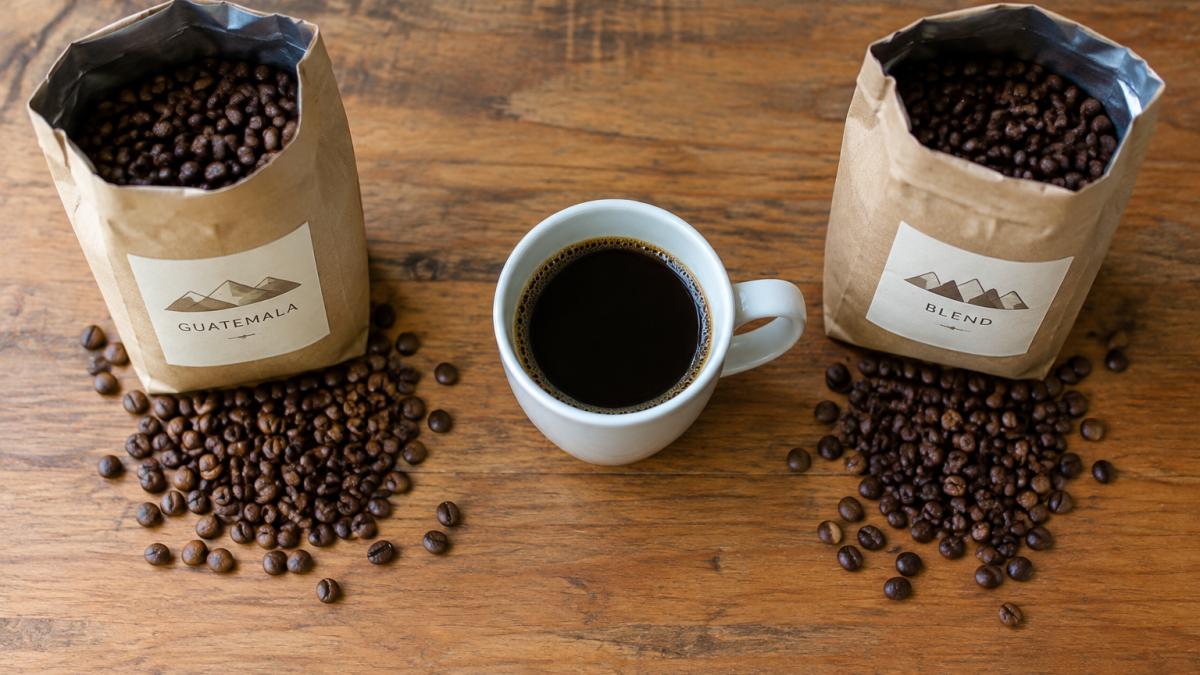
What Is Single Origin Coffee, Exactly?
Single origin coffee is coffee sourced from one defined place, whether that is a country, a region, a single farm, or a specific lot from one harvest. The narrower the label, the more specific the flavor story.
That definition matters because "single origin" is not a legal standard in the United States. It is a trade term, and roasters apply it with varying precision. A bag marked simply "Colombia" is single origin, but it may combine many farms. A bag marked with a farm name and a lot number is far more traceable.
Country, Region, Farm, Lot: How Narrow the Label Gets
Labels move from broad to narrow in four steps:
- Country: The widest label, such as Brazil or Ethiopia. Expect general regional character.
- Region: Tighter, such as Kintamani in Bali or the Sidama Zone in Ethiopia. Terroir starts to show.
- Farm: A named producer or estate, which points to specific growing practices.
- Lot: A single harvest from one section of a farm. The most traceable and the most variable.
When you want to explore this style, you can browse our single origin coffees and read the exact region and process on each bag.
What a Coffee Blend Is and Why Roasters Build Them
A coffee blend is two or more coffees combined on purpose, usually to create a target flavor or to hold a flavor steady across the year. Roasters build blends for balance, body, and reliability.
A common mistake is assuming blends exist to hide cheap beans. In practice, blending is a craft decision. One origin might bring brightness, another brings sweetness and body, and together they cover each other's gaps. Blends also solve seasonality: when a harvest ends, a roaster can adjust the recipe and keep the cup close to what customers expect.
That consistency is why so many house espresso recipes are blends. If you want to see how a roaster puts one together, you can explore our blends and compare the tasting notes.
Single Origin Coffee Countries: What Each One Tastes Like
Origin shapes flavor through altitude, soil, variety, and processing method. Here is what the main single origin coffee countries tend to deliver, based on the coffees we roast.
- Brazil: Smooth and elegant, with cocoa notes and a medium body. Gentle acidity makes it an easy daily cup.
- Colombia: Dried orange, berry, and chocolate, with balanced sweetness.
- Costa Rica: Sweet apple, raisin, and honey, often with a clean finish.
- Ethiopia: Milk chocolate, fruit, and caramel, frequently with floral lift.
- Honduras: Caramel, spice, and brown sugar, with a rounder, darker profile.
- Tanzania: Pear, floral notes, jasmine, and strawberry, typically on the lighter side.
- Indonesia: Dark chocolate, molasses, and brown sugar, with syrupy body from wet-hulling.
If you are comparing these flavors and want a shortcut, our guide to the best single origin coffee beans ranks our top picks by taste and use case.
Single Origin vs Blend for Espresso
Espresso is the brewing context where the single origin vs blend coffee explained question gets most practical, because the method concentrates whatever the bean does well and whatever it does badly. Blends are the safer starting point for most home setups, but the reason is mechanical, not mystical.
A standard espresso recipe uses a much higher-pressure, narrow extraction than pour-over, which tends to amplify acidity and bitterness. A bright, light-roasted coffee that tastes lively as pour-over can turn sharp and sour as espresso.
That does not rule out single origins. A medium or medium-dark single origin with low acidity, like a Bali Blue or a Brazil Santos, can pull a rich, chocolatey shot. The trade-off is that you have less margin for error: small grind changes swing the flavor more than they would with a blend.
Grind size, dose, and yield matter a great deal in espresso. Dial those in first, then experiment with the bean. A useful starting sequence:
- Dose: Start with 18 grams in a double basket.
- Yield: Aim for about 36 grams of liquid out.
- Time: Target 25 to 30 seconds from first drop.
- Grind: Adjust finer if the shot runs fast and tastes sour; coarser if it runs slow and tastes bitter.
- Ratio: Keep dose and yield fixed while you change grind, so you are testing one variable at a time.
For milk drinks and daily shots, start with a blend. If you want to taste a specific origin's character, brew it as pour-over instead, where the same bean has more room to show its fruit and florals without the pressure of espresso extraction.
A light-roasted single origin that tastes thin and sour as espresso may be under-extracted. Tightening the grind and raising the yield slightly can help before you judge the coffee.
Single Origin vs Blend for Milk Coffee
Milk mutes delicate flavors, so blends usually win in milk coffee. Chocolate, nut, and caramel notes push through milk, while floral and fruity single origin notes get buried.
A medium-dark single origin can still work in a flat white or latte, especially one with molasses and brown sugar sweetness. The practical rule: the more milk you add, the more you want a blend or a darker roast.
Watch out: light roasts plus milk often taste thin and sour. If you drink mostly milk drinks, start with a blend and adjust from there.
Price, Freshness and Seasonality: What You Actually Pay For
Price is where the single origin vs blend comparison is often oversimplified. Single origins do not always cost more; price depends on sourcing, lot size, processing, and roast approach.
Freshness is the bigger variable for most drinkers. Coffee tastes best in the weeks after roasting, and every coffee we sell is roasted to order for that reason.
Seasonality also matters: single origins are tied to harvest cycles and can change from one harvest to the next, while blends are formulated to taste consistent over time.
Value comes down to how you brew and how fast you drink. A $24.99 bag sipped over two weeks is a better use of coffee than one that sits in the cabinet. If you drink one cup a day, a 12-ounce bag lasts about two to three weeks at a typical 18-gram dose, which is a useful way to compare price per cup rather than price per bag.
A single origin that tastes flat may be past its peak window. Checking the roast date before judging the coffee can help.
Build Your First Order at Evolve Coffee Company
Start with a sample pack if you are unsure what you like. Our Single Origin Favorites Sample Pack includes six 2-ounce packs, so you can taste Brazil, Colombia, Costa Rica, Ethiopia, Honduras, and Tanzania side by side before committing to a full bag. If you already know you want to explore origins over time, read our guide to starting a single origin coffee subscription.

Here is one way to build a first order:
- Pick one blend for milk drinks and espresso
- Add a sample pack to find your favorite origin
- Note the roast level and process on each bag
- Reorder the full bag you liked most
Every order is roasted to order and shipped with fast, reliable delivery. Whether you land on a bright Ethiopian or a smooth house blend, the goal is the same: a better morning cup.
Frequently Asked Questions
Which is better, a coffee blend or single origin?
Neither wins outright; they answer different questions. A blend is built for balance and consistency, so the cup tastes the same bag after bag, which suits daily drinkers and milk-based drinks. Single origin coffee highlights one place, so you get distinctive flavors you can trace to a country, region or farm. If you want a dependable house cup, choose a blend. If you want to taste what a specific origin does, buy single origin and brew it as a pour-over or drip.
Is single origin or a blend better for espresso?
Blends are often the safer choice for espresso because combining origins can produce a more balanced shot. Single origin vs blend for espresso comes down to control: a single origin can pull a vivid, fruit-forward shot, but small grind or dose changes shift the flavor fast. Try a medium roast single origin once you are comfortable dialing in grind size, and keep a blend on hand for everyday shots and milk drinks.
Which type of coffee works best with milk?
Medium to dark roasts with chocolate, caramel or nutty notes hold their flavor when milk is added. Evolve's Breakfast Blend and House Blend are both medium roasts built for that, and Bali Blue brings dark chocolate and molasses that stand up in a latte. Light, floral single origins tend to disappear under milk, so save those for black coffee. For single origin vs blend for milk coffee, the blend usually wins on consistency.
Why does single origin coffee often cost more?
Small lots from one farm or region are harder to source, and traceability work adds cost at every step from harvest to shipping. Blends let roasters combine coffees to hit a target flavor at a steadier price. At Evolve, single origins like Brazil Santos and blends like House Blend are both $24.99, so the difference in your cart is flavor rather than price. A sample pack lets you test several origins before committing to a full bag.
Choosing between single origin and blend coffee is not a test you can fail. Try one of each, brew them the way you actually drink coffee, and let your own cup decide. Evolve Coffee Company roasts every batch to order for maximum flavor and aroma, sources beans carefully, and delivers fast so freshness is never the weak link. Get started with Evolve Coffee Company and taste the difference a fresh roast makes in your daily ritual.
