

Light Roast vs Medium Roast Single Origin Coffee
Last Updated: November 15, 2026
Quick Summary
For single origin coffee, light roast protects origin character with fruit, floral and tea-like notes, while medium roast builds sweetness and body with caramel and cocoa. Choose light for brightness and clarity, medium for a rounder, sweeter cup. Roasting to order makes roast level the last decision shaping your cup.
- Light roasts keep more natural acids intact, so brightness runs high and body stays light.
- By weight of green coffee, roast level has almost no effect on caffeine content.
- Brew light roasts with water at 200 to 205°F and a 1:16 coffee-to-water ratio.
- Medium roasts suit drip and French press, brewed around 195 to 200°F with a medium grind.
- Every Evolve bag is roasted to order, and single origins run $24.99.
Table of Contents
- Light Roast vs Medium Roast Single Origin Coffee: The Quick Comparison
- Single Origin Coffee Light Roast vs Medium Roast Taste
- Light Roast vs Medium Roast Caffeine Content
- Best Brewing Method for Light Roast Coffee
- Best Brewing Method for Medium Roast Coffee
- How to Choose: A Decision Guide for Your Taste Preferences
- Roast Date, Freshness, and Storage
- Shop Evolve Single Origin Coffee by Roast Level
- Frequently Asked Questions
Light Roast vs Medium Roast Single Origin Coffee: The Quick Comparison
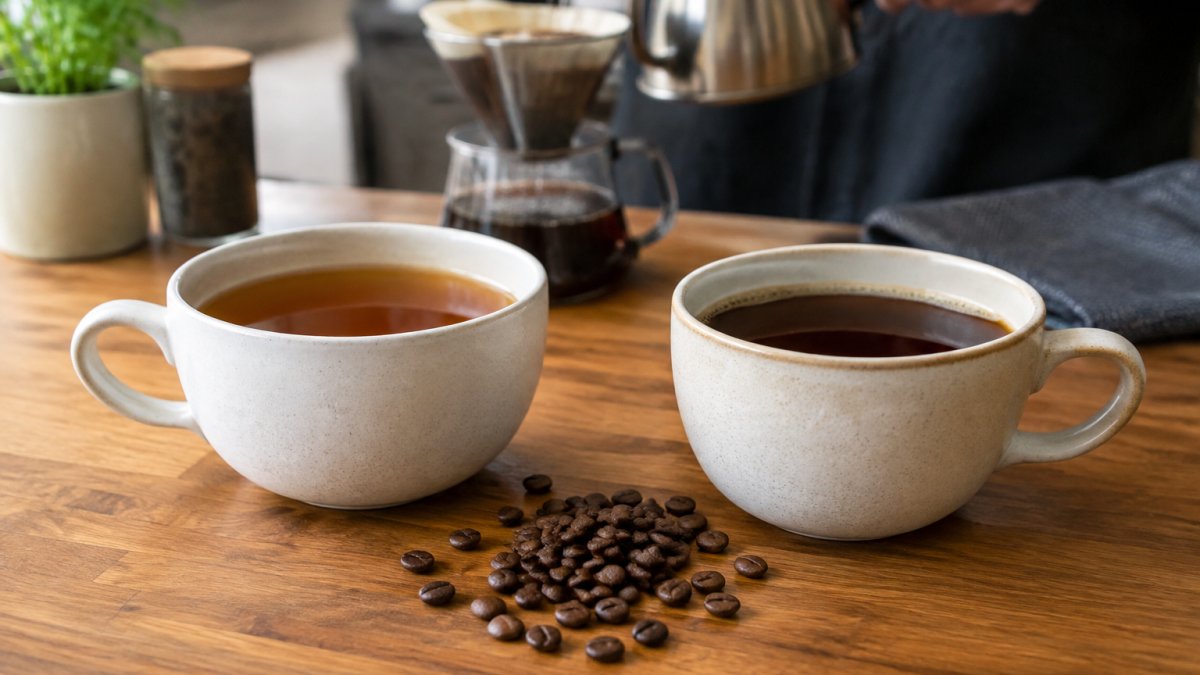
Single origin coffee light roast vs medium roast comes down to one trade-off: light roasts protect origin character, medium roasts build sweetness and body. Roasting to order means the roast level you pick is the last decision that shapes your cup. This guide compares both on taste, caffeine, brewing, and freshness, so you can order with confidence.
The short answer: if you want fruit, florals, and brightness, go light. If you want caramel, cocoa, and a rounder mouthfeel, go medium.
| Factor | Light Roast | Medium Roast |
|---|---|---|
| Flavor focus | Fruit, floral, tea-like | Caramel, cocoa, nuts |
| Acidity | High, bright | Moderate, balanced |
| Body | Lighter, tea-like | Fuller, rounder |
| Bean surface | Dry, matte | Dry to slightly oily |
| Best brew method | Pour-over, drip | Drip, French press |
Single Origin Coffee Light Roast vs Medium Roast Taste
The taste difference is the whole story. Light roast single origin coffee keeps the bean close to its raw state, so origin characteristics dominate. Medium roast lets roasting sugars develop, so the roast itself shares the stage with the origin.
A light roast Ethiopian natural, like our Ethiopia Natural, shows milk chocolate, fruit, and caramel because the roast stops early enough to preserve them. A medium roast, like our Colombia, brings dried orange, berry, and chocolate forward with more roundness.
Acidity, Brightness, and Body in the Cup
Acidity is the lively, tongue-tingling quality that makes coffee taste fresh. Brightness is how sharply that acidity reads. Body is the weight of the coffee on your tongue, from thin and tea-like to thick and syrupy.
Light roasts keep more of the bean's natural acids intact, so brightness runs high and body stays light. Medium roasts mellow some of that sharp acidity while adding mouthfeel. If a coffee tastes "sharp" to you, a medium roast usually fixes it without flattening the cup.
How Roast Level Changes Origin Characteristics
Roast development is a dial. Turn it down and you hear the farm; turn it up and you hear the roaster. Light roasts preserve origin characteristics like blueberry, grapefruit, jasmine, and cherry. Medium roasts caramelize sugars, adding caramelized sugar, caramel, and nutty tones that can soften delicate florals.
This is why single origin coffee rewards attention to roast level. A washed Tanzania with pear and jasmine notes reads floral at medium-light and rounder at medium. Our Tanzania sits at medium-light for exactly that reason. Curious how single origins differ from blends? Read single origin vs blend coffee differences before you commit.
Light Roast vs Medium Roast Caffeine Content
Caffeine content is the most misunderstood part of the light versus medium roast question, and the confusion comes from how the comparison is measured. The short answer: by weight of green coffee, roast level has almost no effect on caffeine. The longer answer explains why two scoops of the same coffee can still deliver different caffeine.
Caffeine by Bean Weight vs. Scoop vs. Brewed Serving
Caffeine is stable through roasting. A gram of green coffee contains roughly the same caffeine whether it is roasted light or medium, and a gram of roasted coffee contains slightly more caffeine simply because roasting drives off water and carbon dioxide, concentrating what remains. The difference is generally small, and dose matters far more.
The measurement that actually changes your cup is volume. If you dose by volume, a scoop of light roast can deliver more caffeine than a scoop of medium roast. If you dose by weight on a scale, the difference largely disappears.
Brewed serving size adds another layer. A 12-ounce cup brewed at a 1:16 ratio from a 20-gram dose contains the caffeine from those 20 grams, regardless of roast. Change the dose to 22 grams and you have added roughly 10 percent more caffeine. Change the ratio to 1:15 and you concentrate the same caffeine into less water. Those variables move caffeine far more than roast level does.
Why 'Dark Means Stronger' Persists
Dark roasts taste bolder, heavier, and more bitter, and drinkers often read that intensity as more caffeine. The flavor comes from longer roast development and increased caramelization and Maillard products, not from added caffeine. A dark roast can actually weigh less per scoop because it has lost more mass during roasting, which is why volume-based dosing can flip the expected result.
Practical Takeaways for Caffeine Control
- Dose by weight, not volume. A digital scale removes the density variable entirely.
- Adjust dose first, then ratio. Adding 2 grams of coffee changes caffeine more reliably than changing roast level.
- Expect small roast-level effects. By weight, light and medium single origin coffees are close enough that most drinkers will not notice a caffeine difference.
- Check brew strength separately. A stronger-tasting cup is not automatically a higher-caffeine cup; extraction and concentration are different variables.
Best Brewing Method for Light Roast Coffee
Light roast single origin coffee rewards brewing methods that extract evenly and preserve clarity, and it can taste sour or thin if brewed like a medium roast.
Starting Points by Brew Method
Pour-over (V60, Kalita, Chemex). Use water at 200 to 205°F, a medium-fine grind, and a 1:16 coffee-to-water ratio (for example, 20 grams of coffee to 320 grams of water). Bloom with twice the coffee weight in water for 30 to 45 seconds, then pour in two or three stages.
Immersion (French press, Clever Dripper). Use water at 200 to 205°F, a medium-coarse grind, and a 1:15 to 1:16 ratio. Steep for 4 minutes, then press or drain.
Espresso. Light roasts are the hardest to dial in. Start with a 1:2 to 1:2.5 ratio (18 grams in, 36 to 45 grams out) and a finer grind than you would use for a medium roast. Expect longer shot times, often 28 to 35 seconds, because the denser bean resists flow.
Drip. Use a medium grind and a 1:16 ratio, with water at 200°F if your brewer allows adjustment. Batch brewers often run cooler than expected, so preheat the carafe and run a blank cycle if the coffee tastes flat.
Why Light Roasts Resist Extraction
Hotter water and a finer grind increase contact and extraction, which is why light roast guidance leans toward the top of the temperature range. The trade-off is that pushing too hard extracts bitterness and astringency, so adjust one variable at a time.
Watch out: if a light roast tastes both sour and bitter at once, the grind is likely too fine and the extraction is uneven. Coarsen slightly and keep the temperature high.
When to Choose a Different Method
If you want the brightest fruit and floral notes, pour-over gives the most clarity. If you want a rounder cup without losing origin character, immersion adds body at the cost of some top-end detail. Espresso concentrates everything, so a light roast that tastes delicate in a pour-over can taste sharply acidic as a shot until you dial it in.
Best Brewing Method for Medium Roast Coffee
Drip and French press are common choices for medium roast coffee. The fuller body and caramel sweetness hold up to immersion brewing, where the coffee steeps and extracts evenly. Use water around 195 to 200°F and a medium grind.
A French press pulls out cocoa and caramel notes that a thin brew would miss. If your medium roast tastes flat, grind coarser and steep a little longer.
How to Choose: A Decision Guide for Your Taste Preferences
Start with your taste preference, not the label. Use this framework:
- Love fruit, florals, and tea-like cups? Choose light or medium-light.
- Want sweetness, cocoa, and a rounder body? Choose medium.
- Drink it black and want clarity? Light roast, pour-over.
- Add milk or drink it strong? Medium roast, French press.
For a deeper match to your palate, our guide on how to choose your coffee flavor profile walks through the process step by step.
Pros and Cons of Light vs Medium Roast Single Origin Beans
Light roast pros: vivid origin character, complex fruit and floral notes, clean finish. Cons: sharp acidity can surprise you, less forgiving to brew, lighter body.
Medium roast pros: balanced sweetness, fuller mouthfeel, easy to brew consistently. Cons: delicate origin notes can fade, less brightness.
Best for light roast: black-coffee drinkers chasing complexity. Skip if: you add milk or want a heavy body.
Best for medium roast: everyday drinkers who want smooth, sweet cups. Skip if: you want maximum fruit and floral punch.
Roast Date, Freshness, and Storage
Roast date beats roast level for freshness. Whole bean coffee holds flavor longer than pre-ground, so buy whole bean and grind just before brewing.
Store beans in an airtight container, away from light, heat, and moisture. Skip the fridge. Our guide to storing coffee beans covers containers and timing in detail.
Shop Evolve Single Origin Coffee by Roast Level
Choosing between light and medium roast single origin coffee is easier once you know your taste preference. Every bag we ship is roasted to order for maximum flavor and aroma, and our single origins run $24.99.
Try our medium-light Ethiopia Natural for fruit and caramel, or our medium Brazil Santos for a smooth, cocoa-forward cup. If you are unsure, start with one bag and taste the difference freshness makes.
The hardest part is committing to a roast level before you have tasted it. We make that easy: order one bag, brew it your usual way, and let your palate decide. Evolve Coffee Company roasts to order, sources beans carefully, and delivers fast, so your first cup tastes like the roaster intended. Get started with Evolve Coffee Company and find the roast that fits your morning.
Frequently Asked Questions
What is the difference between light and medium roast single-origin coffee?
The difference comes down to roast development. Light roasts stop earlier in development, preserving fruity, floral, and tea-like notes with brighter acidity and a lighter body. Medium roasts push further into development, so the bean surface turns dry to slightly oily and the cup gains caramelized sugar, caramel, and nutty tones with softer brightness. A medium roast like Evolve's Brazil Santos shows cocoa and smoothness, while a medium-light Ethiopia Natural keeps milk chocolate and fruit in balance.
Does light roast single-origin coffee have more caffeine than medium roast?
By weight, the difference is small. Caffeine stays stable through roasting, If you measure by weight, the caffeine content of light roast vs medium roast coffee is close to identical. Grind size, coffee-to-water ratio, and brew strength move caffeine more than roast level does, so adjust your recipe rather than switching roasts for a jolt.
Is light or medium roast better for pour-over coffee?
Both work, but they need different recipes. Light roast single-origin coffee rewards a finer grind, hotter water around 200-205 F, and a slower pour to pull out fruit and floral notes without sourness. Medium roast is more forgiving: a medium grind and water near 195-200 F bring out caramel and nutty sweetness with less risk of over-extraction. If you are new to pour-over, start with a medium roast and tighten the grind as you move lighter.
Can the same single-origin coffee taste different at different roast levels?
Yes. Roast profile decides how much of the origin's character reaches the cup. The same green bean roasted light can show blueberry, grapefruit, or jasmine, while a medium roast of that bean trades some of that brightness for caramelized sugar, caramel, and a rounder body. That is why tasting a single origin at two roast levels is one of the fastest ways to learn your own taste preference before committing to a full bag.
