

7 Dark Roast Coffees for French Press Brewing
Table of Contents
- 7 Dark Roast Coffees for French Press Brewing
- Why Dark Roast Works in a French Press
- Our Top Dark Roast Picks for French Press at a Glance
- Best Coffee for French Press: Six Dark and Medium-Dark Options
- Coarse Ground Coffee for French Press: Grind Size and Sediment Control
- French Press Coffee Ratio and a Precise Dark Roast Recipe
- Dark Roast French Press Brew Time and Troubleshooting
- Choosing Your First Dark Roast Bag From Evolve
- Frequently Asked Questions
7 Dark Roast Coffees for French Press Brewing
Last Updated: October 28, 2026
Why Dark Roast Works in a French Press
Dark roast coffee for French press brewing is a natural match. A French press steeps coarse grounds in hot water for several minutes, then pushes a metal filter through them. That long, full-immersion contact pulls heavy body and bold flavor out of dark-roasted beans, and the metal mesh lets the oils through, so the cup feels thick and rounded.
Dark roasts also hide the mistakes that come with immersion brewing. A slightly over-steeped cup of light roast turns sour and thin. A dark roast stays smooth, with chocolate, caramel, and smoky notes carrying through even when the timing drifts.
The trade-off is brightness. Dark roasts give up most of their acidity, so if you want citrus or fruit notes, a lighter coffee suits you better. For most people who want a bold, comforting morning cup, that trade is worth making.
Our Top Dark Roast Picks for French Press at a Glance
Here is how our dark and medium-dark picks compare on the features that matter most for French press brewing.
| Coffee | Roast Level | Flavor Notes | Price | Best For |
|---|---|---|---|---|
| French Roast | Dark | Classic bold, dark roast | $24.99 | Traditional strong cup |
| Italian Roast | Darkest | Deep, intense, slow-roasted | $24.99 | Maximum boldness |
| 6 Bean Blend | Dark | House blend, global mix | $24.99 | Everyday dependable cup |
| Cowboy Blend | Dark and medium | Cocoa, caramel, vanilla | $24.99 | Balanced sweetness |
| Honduras | Medium-dark | Caramel, spice, brown sugar | $24.99 | Smooth, sweet profile |
| Bali Blue | Medium-dark | Dark chocolate, molasses | $24.99 | Rich, chocolatey body |
| Sumatra | Single origin | Dark chocolate, dried fruit, earthy | $24.99 | Earthy, complex cup |
Every coffee in this list is $24.99. Choose based on the flavor you want.
Best Coffee for French Press: Six Dark and Medium-Dark Options
Start with the coffee that matches the flavor profile you enjoy. These six options cover the range from straightforward dark roasts to medium-dark coffees with more sweetness. For each, we note how it tends to behave in a French press, body, bitterness, aroma, and finish, so you can compare like for like rather than guessing from the bag copy.
French Roast is our classic dark roast. It comes from a blend of specialty-grade coffee from Central America, which keeps the cup dependable and bold. In a French press, expect a heavy, coating body with low acidity and a long, bittersweet finish; the metal filter lets the oils through, so the texture reads almost syrupy. If you want the traditional strong French press experience, this is the place to begin. You can buy the French Roast here to try it in your own press.

Italian Roast is darker still. It is a slow-roasted blend of specialty-grade Arabica and Robusta, which gives it an intense, almost smoky edge. The Robusta component adds body and a drying, bitter finish that some drinkers love and others find aggressive; in a French press it can turn harsh if you over-steep, so keep the steep at four minutes and serve immediately after plunging. Choose it if you want maximum boldness. Readers comparing dark options often find it stands apart, and you can pick up the Italian Roast when you want that extra punch.

6 Bean Blend is our house blend, sourced from around the world. It works well as an everyday coffee that stays consistent from cup to cup. In the press it lands mid-weight: enough body to feel substantial, with a rounded finish and modest bitterness, which makes it forgiving if your grind or timing drifts.
Cowboy Blend combines dark and medium roasts, so it lands between bold and smooth. Expect cocoa, caramel, and vanilla tones that round out the body. The medium-roast component keeps a little more aroma in the cup, so the finish feels sweeter and less drying than the pure dark roasts.
Honduras is a medium-dark single origin with caramel, spice, and brown sugar notes. It is sweeter and softer than the darker blends, which makes it a good choice if you find pure dark roast harsh. In a French press it gives a medium-full body with a clean, sweet finish and noticeably less bitterness than the French or Italian roasts.
Bali Blue is a medium-dark single origin from Kintamani, Indonesia. Its tasting profile of dark chocolate and molasses gives it a heavy, velvety body in a French press. The finish is long and chocolatey rather than smoky, which suits drinkers who want richness without the char.
Sumatra is a single origin from Aceh, Indonesia, with medium acidity and a syrupy body. It is the one on this list with a bit more brightness alongside its dark chocolate and earthy notes, which suits drinkers who want complexity. In the press, its oils give a thick mouthfeel, and the earthy notes read as savory rather than bitter.
Coarse Ground Coffee for French Press: Grind Size and Sediment Control
Grind size makes or breaks a French press cup, and it is the variable most worth learning to adjust. Use a coarse grind, roughly the texture of sea salt or coarse sand. Finer grounds slip through the mesh filter, leave sediment at the bottom of your cup, and can taste muddy.
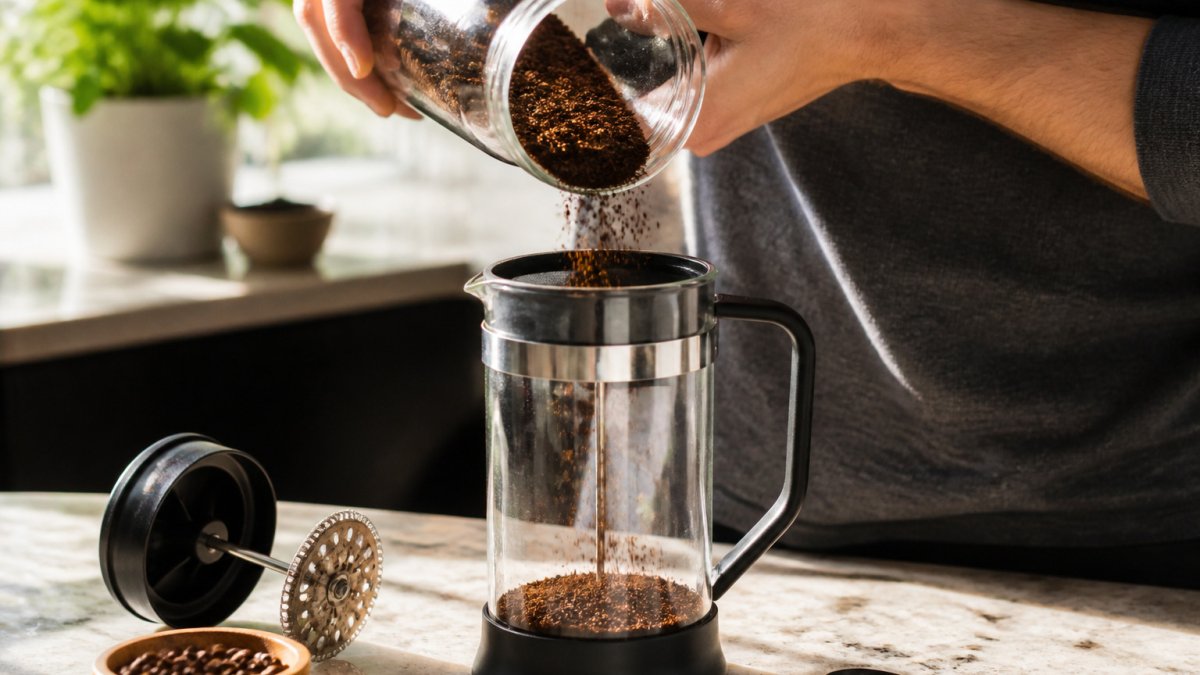
If your cup is gritty, check the grind before anything else. Grind a little coarser, then steep for the same time and compare. If the cup tastes thin or sour, the grind is probably too coarse or the steep too short. Adjust one variable at a time so you can tell what helped.
Sediment control is where technique matters as much as grind. Three moves reduce sludge without changing the coffee:
- Let the crust settle before plunging. After the steep, give the press a gentle stir, then wait 30 seconds so the fines drop before you press. Pressing too soon drives particles through the mesh.
- Plunge slowly and stop short. Push the plunger down at a steady, slow pace and stop just above the grounds rather than forcing it to the bottom. Pour gently and leave the last ounce in the press.
- Decant immediately. Pour the brewed coffee into a second vessel once you have plunged. Leaving it in the press keeps extracting, and dark roasts can turn bitter fast.
Whole beans are worth buying for a French press. Grinding right before brewing gives you control over particle size and preserves the aromatics that dark roasts depend on. Pre-ground coffee goes stale faster and is harder to dial in for immersion brewing.
Watch out: a burr grinder gives a far more even coarse grind than a blade grinder, which produces a mix of fines and boulders. Fines are the main source of sediment, and boulders under-extract, so a blade grinder leaves you fighting both problems at once. If you are stuck with a blade grinder, pulse in short bursts and sift out the dust with a fine strainer before brewing.
French Press Coffee Ratio and a Precise Dark Roast Recipe
A reliable starting point for dark roast French press coffee is a 1:15 ratio, meaning 1 gram of coffee for every 15 grams of water. For a standard 34-ounce press, that works out to about 60 grams of coffee and 900 grams of water.
Follow these steps for a consistent cup:
- Heat water to about 200°F, just off the boil.
- Weigh 60 grams of coarsely ground dark roast into the press.
- Pour in the water, stir gently, and place the lid on without pressing.
- Steep for 4 minutes.
- Press the plunger down slowly, then serve immediately.
Pour the coffee out of the press once you have plunged it. Leaving brewed coffee in the press keeps extracting, and dark roasts can turn bitter fast.
For more on brewing your morning cup, read The Best Way to Brew Morning Coffee: A Practical Guide.
Dark Roast French Press Brew Time and Troubleshooting
Four minutes is the standard steep for dark roast, but adjust based on what you taste. A cup that is harsh or bitter usually means the steep ran too long or the water was too hot. Shorten the steep by 30 seconds and check again.
A cup that tastes flat or weak points the other way. Extend the steep slightly or use a bit more coffee.
Keep an eye on sediment too. If you find grounds at the bottom of your cup, let the press sit for a minute after plunging so the fines settle, then pour gently and stop before the last bit.
Choosing Your First Dark Roast Bag From Evolve
If you are new to dark roast, consider French Roast, our dark roast, or Cowboy Blend, a blend of dark- and medium-roasted coffee with cocoa, caramel, and vanilla tones. Bali Blue and Sumatra are single-origin options.
Freshness matters as much as the bean. Store your coffee in an airtight container away from heat, light, and moisture, and grind only what you need. For a practical guide to keeping beans fresh, read How Do You Store Coffee Beans for Freshness? Before you buy, learn how to tell if coffee beans are fresh so you know what to look for on the bag.
At Evolve Coffee Company, we roast to order for maximum flavor and aroma.
Frequently Asked Questions
What coffee do you put in a French press?
Evolve's Sumatra is a single origin with medium acidity, a syrupy body, and dark chocolate and dried fruit cupping notes. Bali Blue is a medium-dark single origin with a tasting profile of dark chocolate and molasses. Italian Roast is Evolve's darkest roast, a slow-roasted blend of specialty-grade Arabica and Robusta.
Is dark roast coffee good for a French press?
The catalog lists Evolve's French Roast as a dark roast and Honduras as a medium-dark single origin with caramel, spice, and brown sugar tasting notes.
How long should you brew dark roast coffee in a French press?
Steep dark roast coffee for about four minutes with water between 195 and 205 degrees Fahrenheit, then press slowly. Dark roasts extract faster than lighter roasts, so going much past four minutes can make the cup taste harsh or bitter. If the coffee tastes flat, shorten the steep by 30 seconds, and if it tastes bitter, shorten it further or use a slightly coarser grind.
What grind size is best for dark roast coffee in a French press?
Use a coarse grind, roughly the texture of sea salt or coarse sand. A finer grind passes through the press filter, leaves sediment in the cup and over-extracts the dark roast, which intensifies bitterness. If you see grounds in your cup, your grind is too fine or your press was pressed too hard, so adjust the grind coarser first.
