

Premium Coffee vs Grocery Store Coffee: Cost Per Cup
Last Updated: November 5, 2026
Quick Summary
Premium coffee costs roughly 74 cents per cup at a 10-gram dose from a $24.99 12-ounce bag, while a $10 grocery bag of the same size lands near 29 cents per cup. That is an honest starting gap of about 45 cents per cup before freshness and waste enter the picture.
- A standard retail coffee bag holds 12 ounces, about 340 grams, not a full pound.
- Going from 10 to 14 grams per cup raises cost per cup by about 40 percent on the same bag.
- If a third of a grocery bag goes unused, its effective cost per good cup rises by roughly half.
- Most roasters treat the first two to four weeks after roast as the peak window.
- Start with a medium roast blend when moving over from grocery coffee for an easier transition.
Table of Contents
- Premium Coffee vs Grocery Store Coffee: The Real Cost Comparison
- How Much Is a Pound of Coffee? Breaking Down Bag Prices
- Average Cost of Coffee Grounds and What It Means Per Cup
- Fresh-Roasted Coffee vs Grocery Store Coffee: Where the Money Goes
- The Most Affordable Way to Buy Coffee Without Sacrificing Quality
- Cost Per Cup in Practice: Brewing Habits and Waste
- Choosing Your First Bag of Fresh-Roasted Coffee
- Frequently Asked Questions
Premium Coffee vs Grocery Store Coffee: The Real Cost Comparison
The cost of premium coffee vs grocery comes down to one number most shoppers never calculate: cost per brewed cup. A $24.99 bag of fresh-roasted beans and a $10 grocery bag look far apart on the shelf, yet they can land within cents of each other once you divide by the cups each bag actually produces.
This guide walks through bag prices, grounds pricing, and the brewing habits that change the math. Below, we show you exactly how to run the comparison yourself, including the waste and freshness factors that quietly inflate the "cheaper" option.
Here is the core insight up front: the price tag is not the cost. The cost is what you pay per cup you actually drink. A grocery bag that goes stale halfway through costs more per good cup than a fresh bag you finish.
How Much Is a Pound of Coffee? Breaking Down Bag Prices
A standard retail coffee bag holds 12 ounces, not a full pound, so the shelf price rarely tells you what you are paying per ounce. To compare fairly, divide the bag price by its ounce count, then multiply by 16 for a true price per pound.
That single step exposes a lot. Grocery bags often run larger and cheaper per ounce, while specialty roasters sell smaller bags at a higher per-ounce rate. Neither number is the whole story, because ounce price ignores how many cups each bag yields.
- Grocery bag: larger size, lower per-ounce price, unknown roast date
- Specialty bag: smaller size, higher per-ounce price, printed roast date
- The equalizer: servings per bag, not ounces per bag
Average Cost of Coffee Grounds and What It Means Per Cup
The average cost of coffee grounds only means something once you convert it to a brewed cup. Most shoppers compare shelf prices, but the number that actually hits your wallet is cost per cup you drink. Here is a reproducible method you can run on any bag.
The per-cup formula. Cost per cup = bag price ÷ usable grams in the bag × grams per cup. Two adjustments matter: a standard 12-ounce bag holds about 340 grams, and a typical drip or pour-over dose runs 9 to 11 grams per 8-ounce cup. A stronger 6-ounce cup or a wider brew ratio pushes the dose toward 12 to 15 grams, which raises cost per cup even when the bag price is unchanged.
Worked example at a common dose. At 10 grams per cup, a 12-ounce bag yields roughly 34 cups. A $24.99 specialty bag lands near 74 cents per cup. A $10 grocery bag of the same size lands near 29 cents per cup. That is the honest starting gap, roughly 45 cents per cup before freshness and waste enter the picture.
Where the gap narrows. The gap is not fixed. It moves with four levers:
- Dose size. Going from 10 to 14 grams per cup raises cost per cup by about 40 percent on the same bag.
- Brew method. Espresso uses 18 to 20 grams per shot but yields a concentrated 1.5 to 2 ounces, so cost per ounce of brewed coffee is higher than drip even when cost per serving looks similar.
- Usable yield. Stale beans, dialing in, and discarded test brews reduce the cups a bag actually produces. If a third of a grocery bag goes unused, its effective cost per good cup rises by roughly half.
- Household size. Two daily drinkers finish a 12-ounce bag in about two weeks, which keeps either tier fresher than a single occasional drinker would.
Prices move, so run any bag you are considering through the formula above rather than trusting the shelf tag.
The takeaway for your own kitchen. Write down your bag price, bag weight in grams, and your actual dose. Divide once. That single number lets you compare a $10 grocery bag and a $24.99 specialty bag on equal footing, and it is the only fair way to answer whether premium coffee costs more per cup or just more per bag.
Fresh-Roasted Coffee vs Grocery Store Coffee: Where the Money Goes
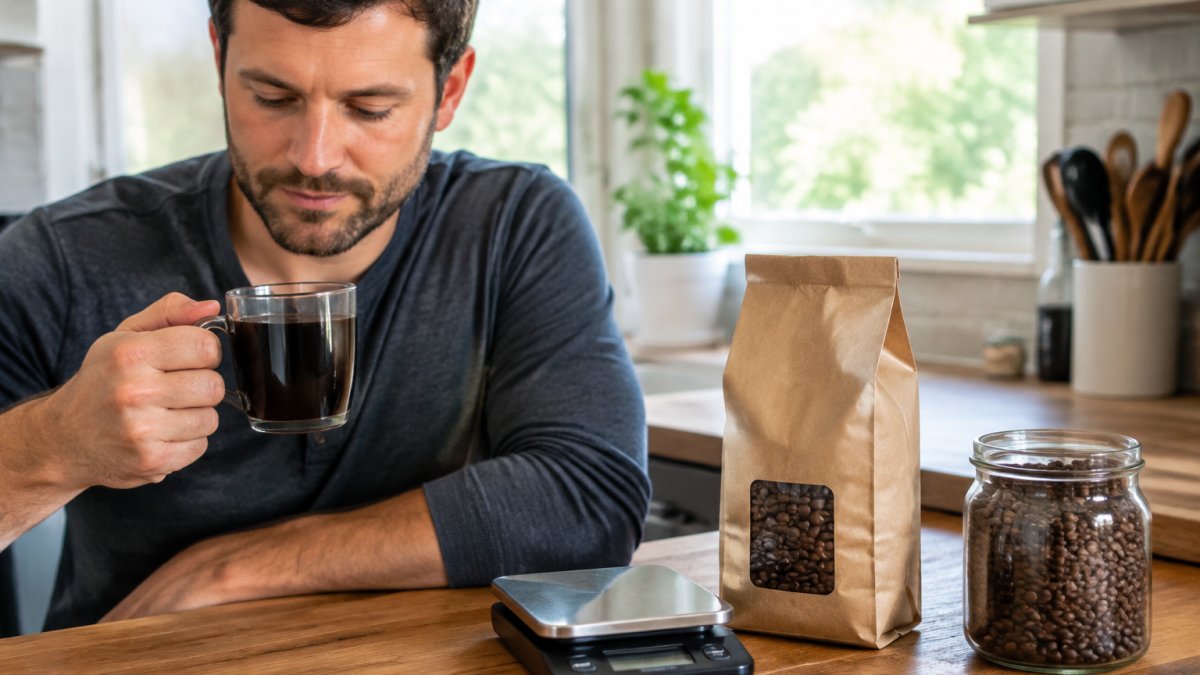
Fresh-roasted coffee vs grocery store coffee is really a question of what your money buys. The bag price splits into four cost buckets, and the split differs sharply between the two tiers.
1. Green coffee and sourcing. Coffee is a crop, and quality starts at the farm. USDA Agricultural Research Service coffee research documents how origin, harvesting, and processing shape bean quality before roasting begins. Specialty lots are often picked selectively, processed with more care, and graded for defects; commodity lots are picked and blended for volume.
2. Roasting and freshness. Roasted coffee stales as it oxidizes. Most roasters treat the first two to four weeks after roast as the peak window, and flavor fades noticeably after that.
3. Packaging and distribution. Grocery coffee bags are often built for long shelf life and months of transit, while smaller-batch roasters ship sooner after roasting.
4. Waste and extraction. A stale bag forces you to use more grounds to reach the strength you want, and some of it gets poured out. Fresh beans extract more predictably, so fewer grams do the same work. That is the quiet reason a higher bag price can still win on cost per satisfying cup.
What the labels do and do not guarantee. "Specialty grade" refers to a scoring standard applied to green coffee, not to the roasted bag in your hand. "Roast date" is the most useful label on the bag because it is the one you can check against the calendar.
12 Pack Single Serve Coffee Capsules →
The middle ground worth knowing. You do not have to choose only between a $10 grocery bag and a $25 specialty bag. Freshly roasted grocery beans and some roasters selling smaller bags sit between the two extremes. Compare them on the per-cup formula in the previous section rather than on shelf price alone.
Watch out: storing beans in the fridge pulls in moisture and odors and speeds staling rather than slowing it. Keep them sealed, cool, and dark, and buy a size you will finish inside the peak window.
The Most Affordable Way to Buy Coffee Without Sacrificing Quality
The most affordable way to buy coffee is to lower cost per cup without lowering quality. Three moves do most of the work.
1. Buy whole beans and grind at home. Pre-ground coffee loses aroma faster because more surface is exposed to air.
2. Match the bag size to your drinking speed. A 12-ounce bag suits one daily cup for about a month. If you drink more, buy larger.
3. Skip the subscription if you want. You can buy a single bag, try it, and reorder only when you are ready. No commitment, no minimum.
If you want the full breakdown of buying good coffee on a budget without a recurring plan, read our guide on how to buy coffee without a subscription.
Cost Per Cup in Practice: Brewing Habits and Waste
Brewing habits swing cost per cup more than most people expect. A sloppy scoop wastes grounds. A weak brew ratio makes you use more coffee to get the strength you want. Both raise your real cost.
| Habit | What It Costs You | Fix |
|---|---|---|
| Eyeballing the scoop | Overdosing by a few grams per cup | Weigh grounds on a small scale |
| Weak brew ratio | More coffee per cup for the same strength | Follow a consistent ratio |
| Stale leftovers | Half a bag poured out | Buy sizes you finish |
| Pre-ground storage | Flavor fades, cups taste flat | Grind just before brewing |
Watch out: storing beans in the fridge pulls in moisture and odors, and it speeds up staling rather than slowing it. Keep them sealed, cool, and dark.
For brewing methods that stretch every gram, our practical morning brewing guide covers ratios and technique.
Choosing Your First Bag of Fresh-Roasted Coffee
Start with a medium roast blend if you are moving over from grocery coffee. It is the easiest transition because it stays smooth and balanced without the sharp edges of a very dark or very light roast.
Our House Blend is a medium roast of Central and South American coffees with nutty, sweet chocolate, and mild citrus notes, and a clean finish. It is the bag we point most first-timers toward. If you prefer something lighter and brighter for mornings, the Breakfast Blend is a smooth South American medium roast built for exactly that.


Best for: daily drip and pour-over drinkers who want one reliable bag. Skip if: you want a dark, smoky roast, since both of these are medium.
Want the deeper same-topic comparison before you commit? Our breakdown of premium beans versus grocery store coffee walks through the value question in full.
Frequently Asked Questions
How much does premium coffee cost compared with grocery store coffee?
Premium coffee typically costs more per bag, but the gap narrows when you calculate cost per cup. A 12-ounce bag of fresh-roasted premium coffee at $24.99 works out to roughly $2.08 per ounce. Grocery store coffee often sells for less per ounce, but you need to compare serving sizes and freshness. Stale coffee can require a stronger dose to get the same flavor, which raises your real cost per cup. Always divide the bag price by the number of cups you actually brew to see the true difference.
Is premium coffee worth the extra cost?
Whether premium coffee is worth it depends on how much you value freshness and flavor. Fresh-roasted coffee is sealed and shipped soon after roasting, so it retains more aroma and consistency than bags that have sat on a shelf for months. If you drink coffee daily and notice stale or flat flavors, the upgrade often pays off in enjoyment per cup. For occasional drinkers, a smaller bag or single-serve option may be a better fit. Compare the cost per cup against what you spend at a café to make a fair judgment.
What is the most affordable way to buy coffee without losing freshness?
The most affordable way to buy coffee is to match the bag size to your drinking speed. A 60-pack of single-serve capsules at $64.99 brings the cost per serving down compared with smaller packs, and the capsules stay sealed until you use them. For whole bean or ground coffee, buy the smallest bag you can finish within a few weeks of the roast date. Bulk buying only saves money if you can store the coffee properly and drink it before it goes stale. Avoid oversized bags that sit open in the cabinet.
How much is a pound of coffee, and why does the price vary so much?
Coffee is usually sold in 12-ounce bags rather than full pounds, so the price per pound is higher than the sticker suggests. A $24.99 bag of Breakfast Blend or House Blend works out to about $33.32 per pound. Grocery store coffee may cost less per pound, but the price reflects different sourcing, roast dates, and packaging. Premium coffee often costs more because of sourcing and roasting choices. The price per pound is only useful when you also compare freshness and serving size.
The real challenge is not finding a cheaper bag. It is finding a bag where every cup tastes like the one you paid for. Evolve Coffee Company roasts every batch to order from carefully sourced beans, ships fast so freshness survives the trip, and lets you buy a single bag with no subscription required. Get started with Evolve Coffee Company and make your next bag earn its price, cup by cup.
